


 Courier Service for UK
 Courier Service for USA
 Courier Service for UAE
 Courier Service for Canada
 Courier Service for Australia
 Courier Service for Singapore
 Courier Service for Germany
 Courier Service for France
 Courier Service for Saudi Arabia
 Courier Service for Japan
 Courier Service for Kenya
 Courier Service for Brazil

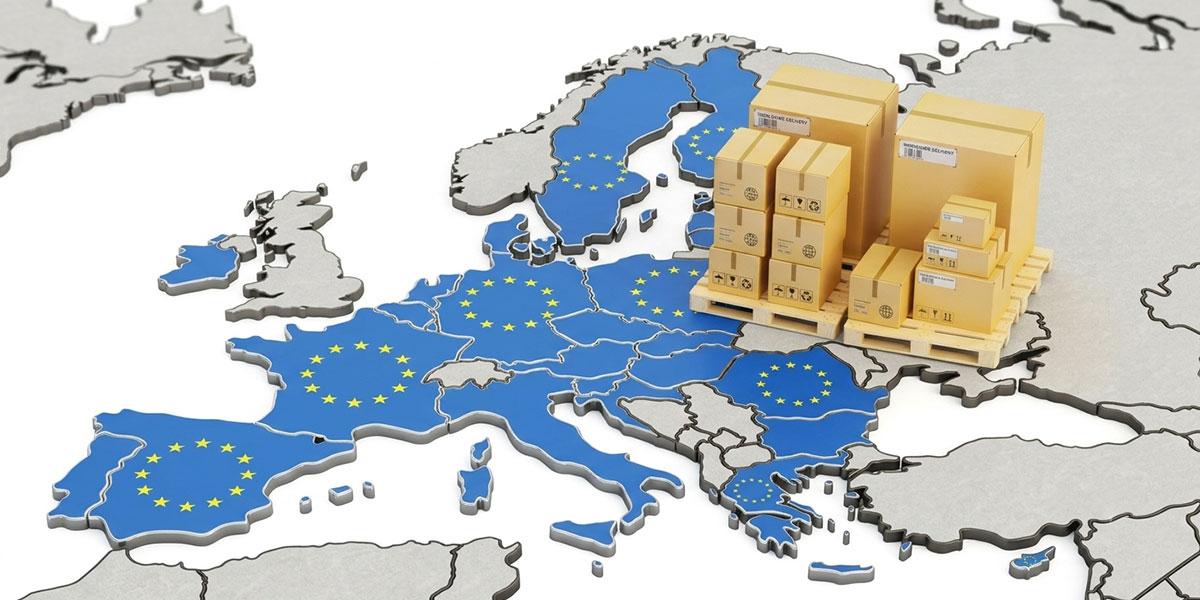
From 1 November 2026, the EU charges a new EU Union Handling Fee of €2 per distinct item on online purchases arriving from outside the EU. There is no value threshold, and the fee sits on top of the €3 customs duty that has applied since 1 July. For Mumbai sellers shipping imitation jewellery, garments or electronics straight to EU consumers, this means more charges per order and more product data at clearance.
This guide covers what changed, how the charges are counted, what data you now need to supply, and what to prepare. It is written for D2C exporters and small online sellers, with a short section for families sending gifts to Germany or France. We do not promise a final cost here. The amount depends on how your goods are declared, where they are going and which shipping terms you use.
Two Changes in Four Months: The 1 July Duty and the 1 November Fee
The EU has changed how it treats small online orders twice in 2026. On 1 July, it ended the €150 duty exemption and began charging a temporary €3 customs duty per distinct item on goods in packages valued at €150 or less (Irish Revenue). The €3 duty is due to run until 1 July 2028. If you have seen this called the EU de minimis removal, this is it: parcels from India that used to enter duty-free no longer do.
On 1 November, a second charge arrived. The Union Handling Fee is €2 per distinct item for goods in packages from outside the EU, regardless of value. It is separate from, and in addition to, the €3 duty (Irish Revenue). Orders above €150 do not pay the flat €3, but they still pay the €2 fee on each item alongside standard duty rates.
The amount is fixed in law. The Commission set it in Delegated Regulation (EU) 2026/2152 of 21 September 2026, which applies from 1 November 2026 and is to be reviewed every two years.
Two more points matter for sellers. The fee is non-refundable, even when goods are faulty or returned (Irish Revenue). It also forms part of the taxable amount used to calculate import VAT, so it affects the VAT figure too.
How Charges Are Counted: Per Item or Declaration Line
The fee is charged per distinct item, not per parcel. Irish Revenue's own examples show how this works: a parcel with three different items attracts the €3 duty and the €2 fee three times, while two identical pens count as one item (Irish Revenue).
These are Irish Revenue's illustrations, and VAT is extra. In practice, carriers describe the unit as a customs declaration line: the fee applies per line of the customs import declaration, which can hold one or more items depending on tariff classification.
What this means for you: a mixed basket, such as a kurta, a jewellery set and a pair of earphones, is likely to create several lines. Variants such as different colours or sizes usually count as one item if they share the same tariff code and description. Keep descriptions, classification and origin consistent and accurate, and confirm with your courier how your typical orders will be declared before you quote a landed cost to a customer.
Product Identifiers and Individual Clearance: What B2C Senders Must Supply
From 1 November, several types of product identifier (PID) must be provided for B2C goods with an intrinsic value of up to €150. Together, these are what searches call EU product identifiers for shipping. They are:
- Merchant product identifier: your own SKU or listing ID for the item.
- Non-standardised manufacturer identifier: the part, model or product code assigned by the maker or supplier.
- Standardised manufacturer identifier: a recognised code, for example a GTIN or EAN barcode number, where one exists.
If mandatory identifiers are missing, incomplete or wrong, expect requests for more information, clearance delays, shipments returned to origin, inspections and post-clearance audits. The aim is product traceability, consumer protection and catching non-compliant goods.
Clearance is changing too. Low-value B2C parcels can no longer be cleared together as a consolidated group, so each parcel is cleared individually. Non-IOSS B2C parcels up to €150 must also be cleared in the customer's country, not at the first EU point of entry. In practice, every parcel needs its own complete data, and one weak line can hold it up.
Many imitation jewellery and garment products have no barcode. The guidance is to confirm that no standardised code exists, and never to leave the field blank or invent a number. If you make or brand the product yourself, you are the manufacturer, so your own model or article number can serve as the manufacturer code. Use one code per model and keep it the same for the product's life.
Sales vs Private Gifts
The fee targets sales. Irish Revenue says it applies to business-to-consumer packages where the buyer is a private individual, and it does not apply to gifts sent from one private individual outside the EU to another private individual in Ireland (Irish Revenue). Carriers likewise scope the fee to B2C imports, meaning distance sales. For gifts, the €3 flat duty does not apply, and gifts between individuals below €45 generally pay no duties or taxes, subject to a customs decision.
Two cautions. First, we checked only Ireland's official page, so rules may vary by member state. Confirm the position for your destination before you send. Second, a gift exemption does not mean no paperwork: product identifiers can be needed for private (C2C) shipments as well, so describe the contents accurately.
For families sending gifts to Germany or France, the simple test is whether it is a genuine personal gift between two private individuals, with no payment involved. If so, our courier service for Germany and courier service for France can help with the shipment. If a customer has paid for the goods, it is a sale, whatever the box says. Do not label a sale as a gift.
Who Pays: DDP vs DDU
The fee is owed by the customs declarant, usually the IOSS holder, carrier or customs representative. Irish Revenue says it is aimed at platforms, marketplaces and the businesses that bring parcels into the EU, rather than being designed as a direct charge on the consumer (Irish Revenue). The carrier then bills it on, usually to whoever pays duties and taxes under the billing option chosen when the shipment is created, often as a separate line on the invoice.
That makes your shipping terms the deciding factor.
Whichever you choose, say it plainly on product pages and at checkout, so the buyer knows what to expect before they pay.
Checklist for Mumbai Jewellery, Garment and Electronics Sellers
This is what to prepare before your next EU order. It is a checklist, not a cost estimate.
For every seller
- Build a product master sheet with SKU, plain-language description, material, HS code, country of origin (India), unit value and any manufacturer or model code.
- Give each product its own SKU and use it as the merchant identifier. Keep it identical across your listing, invoice and shipping data.
- Work out how many declaration lines your typical orders create. Do not assume one line per parcel.
- Choose DDP or DDU for each market and state it on product pages and at checkout.
- Ship one parcel per order where you can. The same product split across two parcels is charged twice, and orders from different customers must never be grouped into one shipment.
- Show line-level values on every invoice and keep them accurate.
- Update your returns policy. The fee is non-refundable, and the €3 duty on low-value B2C returns is generally no longer refundable either.
- Ask your courier whether IOSS suits your setup. Note that IOSS covers VAT only; it does not remove the €3 duty or the €2 fee.
- Send a test parcel with full data before your busy season, so problems show up early.
Imitation jewellery
- Describe the material, such as brass, alloy, plating, glass, resin or stones, instead of just writing "jewellery".
- Decide with your courier whether a set is declared as one item or as separate pieces, because this can change the number of lines.
- For packing and service details, see our imitation jewellery courier service page.
Garments
- State the garment type, fibre composition and whether it is for men, women or children. Details such as knitted or woven can affect classification.
- Identical pieces may count as one item, but only if the declaration data match. Keep descriptions consistent across sizes and colours.
- For shipping options, see our garment courier and cargo services.
Electronics
- Add the brand, model number and a GTIN or EAN where the product has one.
- Check battery type before booking. Lithium batteries carry separate carrier restrictions, so ask us first.
- Product safety is part of why the EU wants item-level data, so make sure the product meets EU requirements before you ship.
Before Your Next EU Shipment
If you are not sure how your catalogue will be declared, send a sample order to the Airborne International team before you book. Having your product sheet, SKUs and shipping terms ready will make the booking much smoother.
Information as of 11 November 2026. Customs rules change, and this post is general guidance, not legal or customs advice.
Sources
- Union Handling Fee (UHF) – 1 November 2026, Irish Revenue
- How the fee applies, Irish Revenue
- Commission Delegated Regulation (EU) 2026/2152 of 21 September 2026, Official Journal of the European Union
 +91 99300 31585
 Track Shipment


